How Solar Inverter Contributes to Higher ROI in Rooftop Solutions
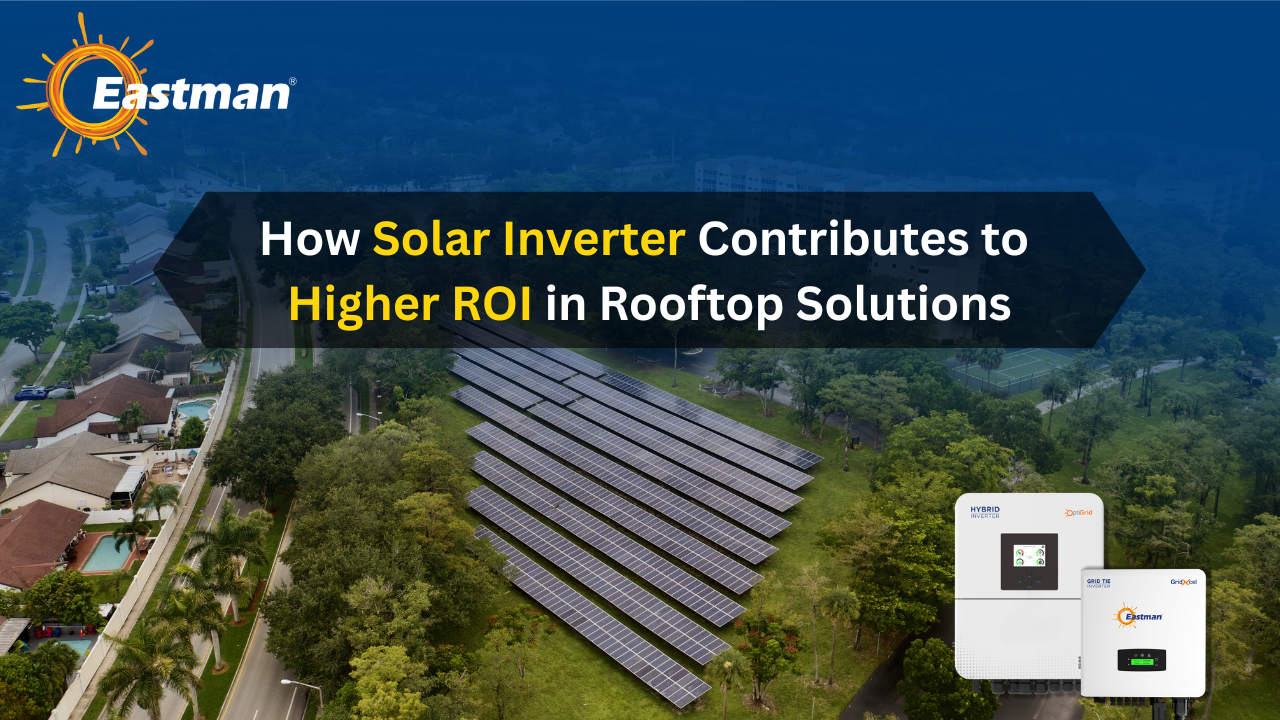
As rooftop solar installations continue to grow across India, one component stands out as the actual engine of every system: The solar inverter. While panels collect sunlight, the inverter converts this raw energy into usable power, intelligently optimizes performance, ensures safety, and plays a pivotal role in shaping the overall return on investment (ROI) of your rooftop setup.
Entering 2025, choosing the right solar inverter is no longer just a technical choice; it has become a strategic financial decision. A premium inverter delivers higher energy yield, a longer system lifespan, reduced maintenance, lower electricity costs, and improved operational efficiency. This makes it the key driver behind maximizing savings.
In this Blog, we'll explore how inverters specifically contribute to higher returns on your solar investment and why they're a critical component to consider when planning your rooftop solar system. We'll also provide insights into calculating your potential savings and maximizing the efficiency of your entire setup.
How ROI Works in Rooftop Solar Systems
Understanding the financial benefits of solar installations begins with grasping the core metrics that determine their value. Return on Investment (ROI) serves as the primary indicator of whether your solar system makes economic sense over time.
What is the ROI on solar panels?
ROI on solar panels represents the financial returns relative to your initial investment in a solar installation. In essence, it measures how long it takes to recover the money spent on installing your solar power system through electricity bill savings. Unlike many investments with uncertain returns, solar panel ROI is relatively predictable since panels consistently generate electricity whenever the sun shines.
For solar systems, ROI is generally calculated by comparing lifetime energy savings against the total installation cost. Most residential solar installations deliver ROI in about 3-5 years, while the systems continue generating essentially free power for 15-20+ years afterwards, resulting in substantial long-term financial benefits.
How the payback period is calculated
The payback period represents the break-even point, when accumulated savings equal your initial investment. Generally, the calculation involves three straightforward steps:
1. Determine your total solar system costs (minus any incentives or subsidies)
2. Estimate your annual energy bill savings
3. Divide your net system cost by your annual savings
For instance, if your 3-kW solar system costs ₹2,10,000, and you receive a government subsidy of ₹78,000, your net cost becomes ₹1,32,000. With monthly savings of ₹3,000 (₹36,000 annually), your payback period would be less than 4 years.
Why ROI matters for homeowners and businesses
For homeowners, solar ROI directly impacts household finances. A high ROI indicates substantial savings on electricity bills that continue long after the initial investment is recovered. Additionally, homeowners benefit from increased property values, as solar-equipped homes often sell faster and at premium prices.
Business owners typically see even greater ROI benefits due to higher energy consumption and commercial demand rates. Most commercial installations achieve full ROI in about 3-5 years, creating a compelling business case. Moreover, given rising electricity costs, solar installations offer strong protection against future rate increases.
Beyond direct savings, solar investments deliver secondary benefits including energy independence, reduced carbon footprint, and operational reliability during grid outages. Businesses additionally gain improved ESG (Environmental, Social & Governance) performance metrics that can strengthen brand reputation.
How Solar Inverters Drive Higher ROI in Rooftop Solar Systems
1. Maximizes Solar Energy Output Through MPPT Technology
Modern solar inverters equipped with MPPT technology ensure panels operate at peak efficiency despite temperature or shading variations. By extracting maximum power from each module, MPPT increases overall energy output by 10–30%, resulting in higher monthly savings, improved system performance, and a significantly faster return on investment.
2. Smart Monitoring for Performance Optimization
Advanced solar inverters now offer real-time monitoring through mobile apps and dashboards, enabling users to track daily generation, consumption patterns, system health, and fault alerts. This transparency helps detect efficiency drops early, minimize downtime, and maintain consistent power production, directly contributing to improved long-term financial returns.
3. Improves System Efficiency & Reduces Conversion Losses
High-efficiency inverters minimize energy loss during DC-to-AC conversion, ensuring more solar power is converted into usable electricity. With modern inverters achieving 97–98% efficiency, households and businesses benefit from reduced grid dependence and enhanced long-term savings, strengthening the overall financial performance of rooftop solar systems.
4. Enables Grid Interaction for Net Metering Benefits
Grid-tied inverters allow excess solar power to be exported back to the grid, generating bill credits through net metering. This reduces electricity expenses, enhances energy utilization, and accelerates payback periods, especially for large rooftop systems, making net-metering-enabled inverters a key driver of higher ROI.
5. Enhances Battery Integration in Hybrid Solar Systems
Hybrid inverters seamlessly coordinate solar production, battery storage, and grid power. They enable optimized charging cycles, 24/7 backup power, and reduced reliance on generators. This integration ensures an uninterrupted power supply, increases solar energy self-consumption, and improves cost-efficiency for both residential and commercial users.
6. Protects Against System Damage & Reduces Maintenance Costs
Advanced solar inverters include built-in safety features such as surge protection, temperature monitoring, anti-islanding, overload prevention, and automatic shutdown. These safeguards protect expensive components, minimize repair needs, and reduce long-term maintenance costs, ultimately improving the financial sustainability and ROI of the entire rooftop solar system.
7. Extends the Lifespan of Rooftop Solar Systems
A high-quality inverter ensures stable system performance, smooth grid synchronization, and controlled load management. By preventing electrical stress on components, it enhances the durability of rooftop solar systems, supporting a lifespan of 20–25 years and ensuring more years of reliable energy generation and more substantial overall returns.
8. Suitable for Both Residential & Commercial Rooftops
Modern solar inverters offer versatile functionality, supporting smart home integration, night-time backup, and efficient energy management for residences. For commercial users, they enable peak load handling, optimized power distribution, and scalable monitoring. This adaptability enhances system performance and delivers higher ROI across diverse rooftop applications.
Factors That Influence ROI in Rooftop Solutions
Several interrelated factors determine the ultimate financial return of your solar installation. Understanding these elements helps you make smarter investment decisions.
1. System size and panel efficiency
The efficiency of solar panels directly impacts how much electricity your system generates. High-efficiency panels deliver more energy from the same sunlight, making them essential for maximizing power generation. With greater energy output from fewer panels, you'll reduce overall installation costs while still meeting your electricity needs. Premium high-efficiency panels often maintain their performance longer, ensuring sustained energy production over their 30-year lifespan.
2. Local sunlight availability
Geographic location fundamentally determines solar potential. Regions closer to the equator typically receive more direct sunlight throughout the year, resulting in higher solar irradiance. In India, there are approximately 250-300 sunny days annually. These natural conditions create an excellent foundation for solar energy production, as more peak sun hours translate directly into greater electricity generation.
3. Government subsidies and net metering
Government incentives dramatically improve ROI by reducing upfront costs. The PM Surya Ghar Muft Bijli Yojana offers lavish subsidies for rooftop installations, effectively shortening payback periods. Through net metering, excess electricity flows back to the grid, earning you credits that further reduce bills. This mechanism allows solar customers to offset nighttime consumption with daytime overproduction.
4. Maintenance and inverter lifespan
Though solar panels typically last 25-30 years, inverters generally need to be replaced after 10-15 years. Regular maintenance, including cleaning, performance monitoring, and professional inspections, extends system life and maintains optimal efficiency. Investing in high-quality inverters with more extended warranties provides better long-term protection for your solar investment.
Conclusion
Solar inverters are undoubtedly the unsung heroes of rooftop solar installations, directly influencing your system's financial returns. Solar power already delivers compelling economics compared to grid electricity. When combined with efficient inverters, government subsidies, and net metering arrangements, your rooftop solar system can achieve payback periods of 3-5 years while continuing to generate essentially free electricity for 10-15 years afterwards.
The decision to invest in high-quality inverters might slightly increase initial costs, yet this choice ultimately delivers superior long-term value. Your inverter selection fundamentally determines how much solar energy powers your home or business. Therefore, choosing the right inverter represents one of the most important decisions you'll make when designing your solar power system.
Solar technology continues to advance rapidly, with inverters leading the efficiency revolution. As electricity rates rise, your well-designed solar system with premium inverters will become increasingly valuable, providing decades of clean, affordable energy while delivering one of the most predictable and attractive investment returns available today.
Upgrade your Solar System Today!
Upgrade your rooftop solar system with high-performance inverters designed to maximize energy output and long-term savings. Explore advanced inverter technologies, innovative monitoring features, and reliable battery-ready solutions that deliver superior ROI for homes and businesses. Take the next step toward smarter, more efficient solar power today.
Contact Eastman Solar for more information.
Explore the Full Range of Solar Inverters.
Get to know your nearest Store Locator for convenience.
FAQs
Q. How does a solar inverter impact the overall efficiency of a rooftop solar system?
A. Solar inverters play a crucial role in maximizing system efficiency by converting DC power from solar panels to usable AC electricity. Modern inverters achieve impressive efficiency ratings of 95-98.5%, directly impacting energy output and financial returns. Even minor efficiency improvements can result in significant savings over the system's lifetime.
Q. What is the typical ROI for a rooftop solar installation?
A. Most residential solar installations deliver ROI in about 3-5 years. After this payback period, the systems continue to generate essentially free power for 15-20+ years, resulting in substantial long-term financial benefits and allowing homeowners to reduce electricity expenses.
Q. How does inverter sizing affect solar system performance?
A. Proper inverter sizing is fundamental to maximizing efficiency. Experts typically recommend a DC-to-AC ratio between 1.1 and 1.3, allowing for optimal efficiency without excessive clipping. This slightly oversized panel configuration improves performance during early morning and late afternoon when sunlight is less intense.
Q. What advanced features do modern solar inverters offer to improve system performance?
A. Modern inverters include innovative features such as voltage regulation, reactive power management, and real-time monitoring. These technologies help maximize energy harvest, ensure optimal grid integration, and quickly identify underperforming components to minimize downtime and lost revenue.
Q. How do government incentives impact the ROI of rooftop solar systems?
A. Government incentives significantly improve ROI by reducing upfront costs. For example, the PM Surya Ghar Muft Bijli Yojana offers subsidies up to ₹78,000 for rooftop installations, effectively shortening payback periods. Additionally, net metering arrangements allow solar customers to offset nighttime consumption with daytime overproduction, further enhancing financial returns.
Keywords: Solar inverter ROI, solar inverter benefits, rooftop solar Roi, best solar inverter for rooftop systems, solar inverter efficiency, hybrid solar inverter, MPPT solar inverter, grid-tied solar inverter, solar inverter performance