How a Hybrid Solar System Works and Improves Energy Independence
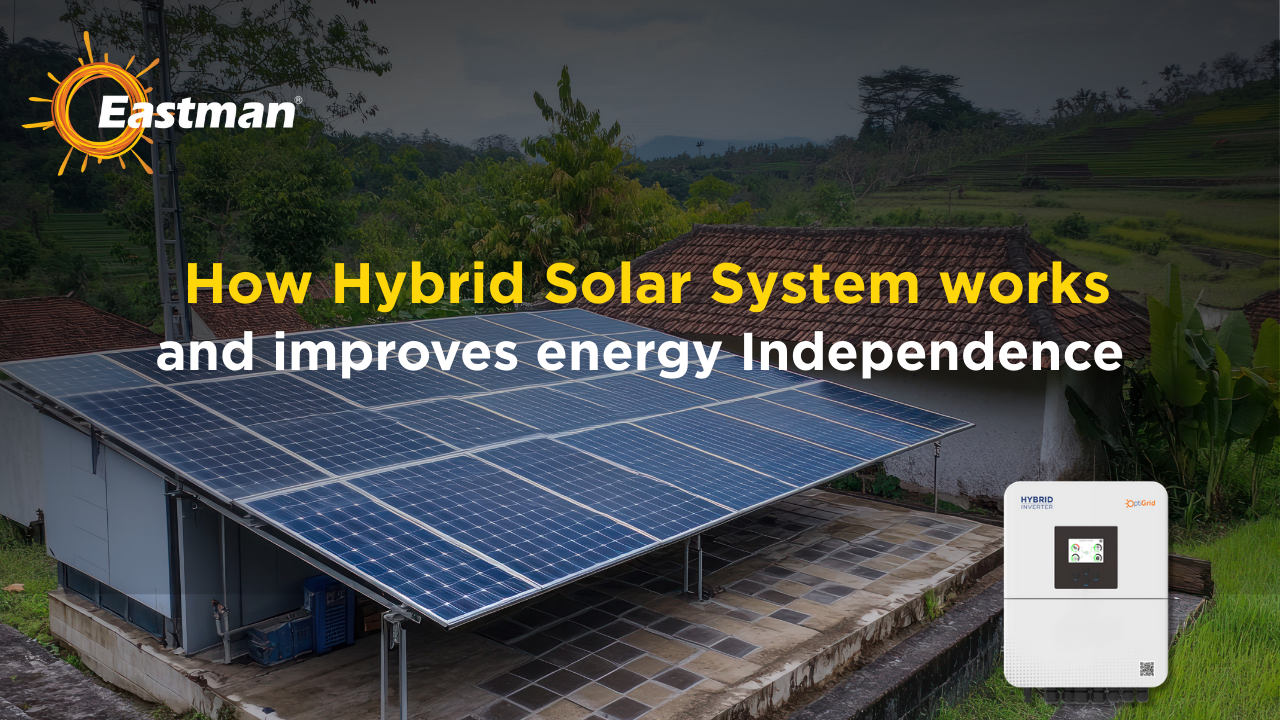
India’s energy landscape is evolving rapidly. Rising electricity costs, frequent power outages, and growing awareness of sustainability are encouraging homes and businesses to adopt smarter energy solutions. While grid-tied solar systems help reduce electricity bills, they do not provide power during outages. Off-grid systems offer backup but limit interaction with the utility grid.
This gap is effectively addressed by hybrid solar systems, which combine the advantages of both approaches. By integrating solar power, battery storage, and grid connectivity, hybrid systems deliver uninterrupted electricity, optimized energy usage, and greater control over consumption. As energy independence becomes a key priority for Indian consumers, hybrid solar systems are increasingly viewed as the future of solar energy.
In this blog, we explain how a hybrid solar system works, its core components, how it enhances energy independence, and why it is ideally suited for Indian conditions. We also highlight how Eastman’s hybrid solar solutions enable reliable, long-term energy freedom.
What is a Hybrid Solar System?
A hybrid solar system is an advanced energy solution that integrates solar panels, a hybrid inverter, battery storage, and the utility grid into a single intelligent system.
Unlike conventional setups, a hybrid system can:
Generate electricity from solar panels
Store surplus energy in batteries
Draw power from the grid when required
Provide uninterrupted backup during power outages
This flexibility makes hybrid systems particularly suitable for regions with unreliable grids and high energy demand, a common challenge across India.
Key Components of a Hybrid Solar System
1. Solar Panels
Solar panels capture sunlight and convert it into DC electricity. They serve as the primary energy source for the system.
2. Hybrid Solar Inverter
The hybrid inverter acts as the brain of the system. It:
Converts DC power into usable AC electricity
Manages energy flow between solar panels, batteries, and the grid
Automatically prioritizes energy sources
Enables seamless switching during power outages
Eastman hybrid inverters offer high efficiency, advanced protection features, and compatibility with both lead-acid and lithium battery technologies.
3. Battery Storage
Batteries store excess solar energy for use during evenings, nights, or grid failures. Hybrid systems support:
Tubular lead-acid batteries
Advanced lithium (LiFePO₄) batteries
Battery storage is a critical element in achieving true energy independence.
4. Utility Grid
The utility grid functions as a secondary energy source, supplying power when solar and battery capacity is insufficient and absorbing surplus energy when export is enabled.
How does a Hybrid Solar System Work?
A hybrid solar system dynamically adapts to energy availability and demand through intelligent automation. Step-by-Step operation is as follows-
Daytime with Sunlight: Solar panels supply power to connected loads while excess energy charges the batteries.
Battery Charging Phase: Once the batteries are fully charged, surplus solar energy can be exported to the grid (if permitted) or regulated by the inverter.
Evening and Night: Stored battery energy supplies power when solar generation stops.
Grid Support: When battery levels fall below a predefined threshold, the system automatically draws power from the grid.
Power Outages: During grid failures, the hybrid inverter instantly switches to battery-backed solar power, ensuring an uninterrupted electricity supply.
All these transitions occur automatically, without manual intervention.
How Hybrid Solar System improve energy independence?
1. Reduced Dependence on the Grid
By maximizing solar generation and battery usage, hybrid systems significantly reduce reliance on grid electricity, especially valuable in areas with frequent outages or unstable supply.
2. Reliable Power Backup
Unlike grid-tied systems, hybrid solar systems continue to supply power during blackouts, making them ideal for homes, offices, hospitals, and commercial establishments.
3. Optimized Energy Utilization
Hybrid inverters intelligently prioritize solar power first, followed by battery energy and then the grid, resulting in lower electricity bills and higher efficiency.
4. Protection Against Rising Electricity Tariffs
By generating and storing their own energy, users are insulated from rising grid tariffs and fuel price fluctuations.
5. Energy Security for Businesses
For commercial users, uninterrupted power ensures:
a. Reduced operational losses
b. Stable productivity
c. Greater financial predictability
Key Benefits of a Hybrid Solar System
A. Ideal for Indian Conditions-
India faces unique energy challenges, including:
Frequent power cuts
Voltage fluctuations
High summer electricity demand
Dependence on costly diesel generators
Hybrid solar systems address these challenges by delivering clean, silent, and cost-effective backup power, eliminating fuel dependency, and reducing operational costs.
B. Smart Technology in Hybrid Systems-
Modern hybrid systems integrate digital intelligence alongside hardware.
With smart monitoring, users can:
Track solar generation
Monitor battery health and charge levels
Analyze grid consumption
Optimize energy usage patterns
The Eastman One App enables remote monitoring and control of hybrid systems, allowing users to manage their energy anytime, anywhere.
C. Improves Return on Investment-
Hybrid solar systems deliver strong long-term returns by:
Reducing electricity bills
Eliminating diesel generator costs
Lowering maintenance expenses
Extending system and equipment lifespan
Over time, the system pays for itself while providing reliable and sustainable power.
Hybrid vs Grid-Tie vs Off-Grid Systems
Feature | Grid-Tied | Off-Grid | Hybrid |
Power during an outage | No | Yes | Yes |
Battery storage | No | Yes | Yes |
Grid interaction | Yes | No | Yes |
Energy flexibility | Low | Medium | High |
Hybrid systems offer the most balanced and future-ready energy solution.
Why Eastman Hybrid Solar Systems Stand Out
Eastman designs hybrid solar solutions specifically for Indian operating conditions.
Eastman Hybrid Inverters: Built for Reliability and Control
Eastman hybrid inverters feature:
48V Low Battery, Transformer Isolation Design
Max. Charging/Discharging current of 240A
Support storing energy from the diesel generator
100% unbalanced output, each phase
Max. Output up to 50% rated power
Max. 10 pcs parallel for on-grid & off-grid operation
Support multiple batteries parallel
6 time periods for battery charging/discharging
10 years of Warranty
Battery Solutions that Enable Energy Independence
Eastman offers a comprehensive range of:
Tubular solar batteries
Lithium (LiFePO₄) batteries with advanced Battery Management Systems (BMS)
These batteries are optimized for deep cycling, fast charging, and long service life.
Service and Support that Complete the Ecosystem
Energy independence extends beyond technology. Eastman’s extensive service network, digital platforms, and customer support ecosystem ensure long-term reliability and peace of mind.
Conclusion
A hybrid solar system is more than just a power solution; it is a pathway to true energy independence. By intelligently combining solar power, battery storage, and grid connectivity, hybrid systems deliver reliable electricity, cost savings, and resilience against power disruptions.
For Indian homes and businesses facing rising energy costs and inconsistent grid supply, hybrid solar systems offer a sustainable, future-ready solution. With advanced technology, smart monitoring, and robust design, they empower users to take full control of their energy needs.
With Eastman’s hybrid solar solutions, users can move beyond dependence and toward a smarter, self-reliant energy future.
Ready to take control of your energy future?
Choose Eastman Hybrid Solar Systems for reliable power, smart control, and true energy independence.
Contact Eastman Solar for more information.
Explore the full range of Hybrid inverters.
Use your nearest Store Locator for convenience.
FAQ’s
Q. Can a hybrid solar system operate without the grid?
A. Yes. It can run on solar and battery power during grid outages.
Q. Is a hybrid system suitable for Indian homes?
A. Yes. It is ideal for regions with frequent power cuts and high electricity costs.
Q. Do hybrid systems support lithium batteries?
A. Yes. Eastman hybrid inverters support advanced lithium battery solutions.
Q. Can I monitor my hybrid solar system remotely?
A. Yes. Monitoring is available through the Eastman One App.
Q. Is a hybrid solar system more expensive than a grid-tied system?
A. The initial investment is higher, but long-term savings, reliability, and energy security provide superior value.