Top On-Grid Solar Solutions for Residential Purpose
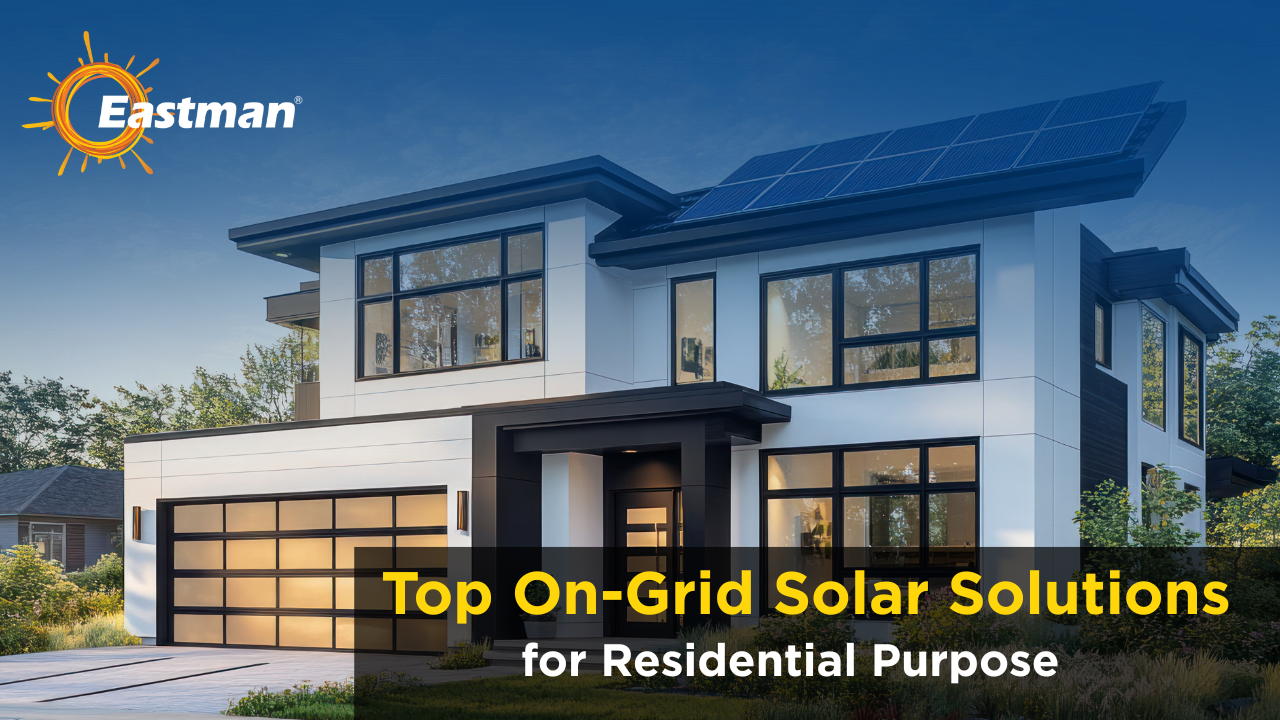
To harness the power of the sun to cut electricity bills, increase your property value, and contribute to a sustainable future. As homeowners approach retirement or look to secure their financial future, managing recurring household expenses becomes a priority. Electricity bills are often one of the most significant monthly costs, fluctuating with seasons and rising energy prices. Fortunately, advancements in renewable energy technology have made solar power an accessible, reliable, and financially smart choice for residential properties.
Transitioning to solar energy is no longer just an environmental statement; it is a strategic financial decision that offers peace of mind and long-term security. Among the various configurations available, on-grid solar solutions stand out as the most popular and cost-effective choice for residential areas with reliable grid connectivity. These systems allow homeowners to generate their own clean energy while maintaining a connection to the public utility grid, ensuring a seamless power supply.
This comprehensive guide explores the mechanics, benefits, and top solutions for on-grid solar systems. We will examine how these systems integrate into modern homes and analyze the potential cost savings. By understanding the technology and identifying the right partners, such as Eastman, you can transform your home into an energy-efficient asset that supports a comfortable and secure lifestyle. This guide covers the best on-grid solar solutions for homes, key components, benefits, and how Eastman is empowering Indian rooftops with cutting-edge solar innovation.
Understanding On-Grid Solar Solutions
To make an informed decision, it is essential to understand exactly what an on-grid solar system is and how it functions within a residential setting. An on-grid solar system, also called a grid-tied or grid-connected solar setup, connects your rooftop solar panels directly to the public electricity grid. The system generates electricity from sunlight and powers your home, while excess energy can be exported to the grid through net metering, reducing your electricity bill further.
Unlike off-grid systems, on-grid solar setups don’t require batteries to function during the night or on cloudy days. On-grid systems utilize the utility grid as a virtual battery, making them more cost-effective, easy to install, and simpler to maintain.
How On-Grid Systems Work: The process is straightforward and efficient as follows-
1. Generation: Solar panels installed on your roof capture sunlight and convert it into Direct Current electricity.
2. Conversion: This DC electricity flows into a solar inverter, which converts it into Alternating Current, the standard form of electricity used to power home appliances.
3. Consumption: The home uses solar-generated power first.
4. Export: If the system generates more power than the home needs, excess electricity is automatically exported to the utility grid.
5. Import: When solar panels are not generating power, such as at night, the home draws electricity from the grid as usual.
Components of an On-Grid Solar System
A standard residential on-grid system is composed of several key components, each playing a critical role in energy generation and management. To build an efficient on-grid solar system, these key elements work in harmony:
1. Solar Photovoltaic (PV) Panels: These are the primary energy collectors. High-efficiency monocrystalline or polycrystalline panels are typically used to capture sunlight and convert it to electricity to maximize energy production even within limited roof space.
2. Solar Inverter: The heart of the system. In an on-grid setup, the inverter ensures the electricity produced matches the voltage and frequency of the grid, as it converts DC power from panels to AC power for home use.
3. Net Meter: This is a bi-directional meter that replaces your standard electricity meter. It tracks both the power you draw from the grid and the power you export to it. This allows "net metering," in which you are credited for the excess energy you produce.
4. Mounting Structure: A sturdy framework that secures the panels to the roof, ensuring they are installed safely and oriented at the optimal angle to capture sunlight.
5. Balance of System: This includes cables, wiring, junction boxes, and safety switches required to connect the components safely. Ensure a safe and robust connection, safety components such as DC/AC isolators, surge protection devices, and high-quality wiring ensure system safety and longevity in your residence and grid.
Best On-Grid Solar Solution Companies for Residential Purpose
Choosing the right on-grid solar solution depends on your home's size, electricity usage, and future. Below are the top on-grid solar solution companies that homeowners in India are increasingly adopting:
1. Eastman
Offers reliable on-grid and hybrid solar inverters & rooftop solutions.
Known for strong performance, protection features, and service ecosystems.
2. Tata Power Solar
End-to-end rooftop solar solutions with high-efficiency panels and reliable inverters.
Strong nationwide presence and service network.
3. Adani Solar
Major solar manufacturer with high-quality PV modules ideal for residential rooftops.
Often paired with reputable inverter brands for complete on-grid systems.
4. Luminous
Offers on-grid solar inverters and balance-of-system products.
Well-known for durability and strong service networks.
5. V-Guard Solar
Provides reliable on-grid solar inverters and rooftop solutions.
Good after-sales support and focused on residential applications.
6. Growatt India
Global solar inverter brand with strong presence in India.
Offers efficient on-grid and hybrid inverters suitable for homes.
7. Sungrow India
The world is one of the largest inverter manufacturers.
Offers competitive on-grid inverters with robust performance and warranties.
8. Microtek Solar
Offers cost-effective on-grid inverters and rooftop solutions.
Popular among residential users seeking value.
9. Waaree Energies
Strong EPC and installer network for residential rooftops
Popular among residential users seeking value.
10. Vikram Solar
Widely used in residential on-grid projects via EPC partners
Tier-1, high-efficiency solar PV modules
Why On-Grid Solar is Ideal for Residential Use
1. Significant Reduction in Electricity Bills: A well-designed residential on-grid solar system can reduce electricity bills by 70–90% depending on system size and usage patterns. During the day, the home runs on free solar power. Any excess exported to the grid generates credits, which can be used to pay for the electricity consumed at night. Over time, the system pays itself, making solar a long-term financial asset rather than an expense for residential use.
2. Net Metering Benefits: Net Metering is a game-changer for residential purposes. When your solar system generates more power than you consume, the surplus electricity is exported to the grid, and you receive credits. These credits offset future electricity consumption, especially during monsoon or winter months when solar generation is lower.
3. Environmentally Responsible Energy: Adopting solar energy is a powerful way to contribute to a greener planet. By generating clean, renewable energy at home, you directly reduce the demand for fossil fuel-based power plants. This leads to a significant decrease in carbon footprints. For the eco-conscious homeowner, this provides a sense of contribution to community health and the well-being of future generations.
4. Low Maintenance & High Reliability: Since on-grid systems do not use batteries, maintenance requirements are minimal. Regular panel cleaning and periodic inspections are sufficient to keep the system running efficiently for 25+ years. High-quality components from trusted brands like Eastman ensure durability, safety, and consistent performance.
5. Increased Property Value: Homes equipped with rooftop solar systems are seen as modern, future-ready properties. Buyers increasingly value energy-efficient homes, making solar-powered houses more attractive in the real estate market.
How to Install an On-Grid Solar System
A successful transition to solar energy requires proper installation and routine care. While technical in nature, the process is streamlined when handled by professionals. Steps for installation are as follows:
1. Site Assessment: A solar engineer visits the property to analyze the roof structure, shadow-free area, and orientation. They also review past electricity bills to determine the necessary system capacity (e.g., 3kW, 5kW, or 10kW).
2. System Design: Based on the assessment, a customized layout is created to maximize sunlight exposure.
3. Permits and Approvals: Documentation is submitted to the local utility company and relevant government agencies to approve the grid connection and net metering.
4.Installation: The mounting structure is fixed to the roof, followed by the panels and the inverter. Wiring is routed safely to the main distribution board.
5.Commissioning: Once the utility company installs the bi-directional net meter, the system is tested and officially switched on.
Conclusion
Switching to an on-grid solar system for residential use is no longer just an eco-friendly decision; it’s a smart financial move for today’s homeowners. With rising electricity costs and improved net-metering policies across India, on-grid solar offers an ideal balance of affordability, reliability, and long-term savings. It offers a practical way to eliminate unpredictable energy costs while adding value to your home. With robust technology, significant cost benefits, and the environmental advantage of green energy, on-grid solar is the ideal choice for residential purposes.
The key to a successful solar journey lies in choosing a system that matches your lifestyle, electricity usage, and future. A well-designed on-grid solar solution ensures you use clean energy efficiently during the day, benefit from grid support when needed, and enjoy minimal maintenance for decades. By understanding your residential needs and selecting quality components, solar becomes a worry-free, long-term investment rather than a complex technical choice.
With trusted brands like Eastman Auto & Power Ltd. offering high-performance solar panels, advanced inverters, and expert guidance, homeowners can confidently move towards energy independence. The transition to solar isn’t just about saving money; it’s about securing a cleaner, smarter, and more sustainable future for your home and family.
Ready to Switch to smart, sustainable Energy?
Make the smart switch to Eastman’s residential on-grid solar solutions and start saving on your electricity bills. Our experts help you choose the right solar system based on your home, usage, and future needs. With high-efficiency products and trusted nationwide support, Eastman makes solar simple and reliable.
Get your estimate on On‑Grid Solar Combos & Calculator
Explore Eastman Solar Solutions here.
Contact Eastman for more information.
Get to know your nearest Store Locator for convenience.
FAQ’s
Q. Does an on-grid solar system work during a power outage?
A. No. Standard on-grid systems are designed to shut down immediately during a grid failure. This is a safety feature called "anti-islanding" to protect utility workers from fixing the lines from being electrocuted by the power your panels generate.
Q. Can I run my air conditioner on solar power?
A. Yes. On-grid systems are synchronized with the grid. You can run heavy loads like ACs. If your solar generation is sufficient at that moment, it runs on solar. If not, the system seamlessly draws the extra required power from the grid.
Q. How much maintenance does a solar system require?
A. Very little. Cleaning the panels with water every few weeks to remove dust is usually sufficient. There are no moving parts to wear out.
Q. What happens to the excess electricity I generate?
A. Excess electricity is exported to the government grid. Your bi-directional net meter records this, and your utility provider gives you credit for these units, which is adjusted against your electricity bill.
Q. Which on-grid solar system is best for homes in India?
A. A standard rooftop on-grid solar system with net metering is best for most Indian homes due to affordability and high savings.
Keywords: on-grid solar solutions, on-grid solar system for home, residential on-grid solar system, rooftop on-grid solar system, on-grid solar for residential purpose, best on-grid solar system in India, residential solar solutions, solar rooftop system for house, grid connected solar system, solar power system for home, solar system with net metering, solar system for home without battery, hybrid solar system for home, MPPT solar inverter for home, solar inverter and battery brand, top solar brands in India, best solar companies in India, solar energy solutions for residential, rooftop solar installation for home, Eastman solar solutions